Growing Up With a Dog: Why Indian Kids Learn Faster
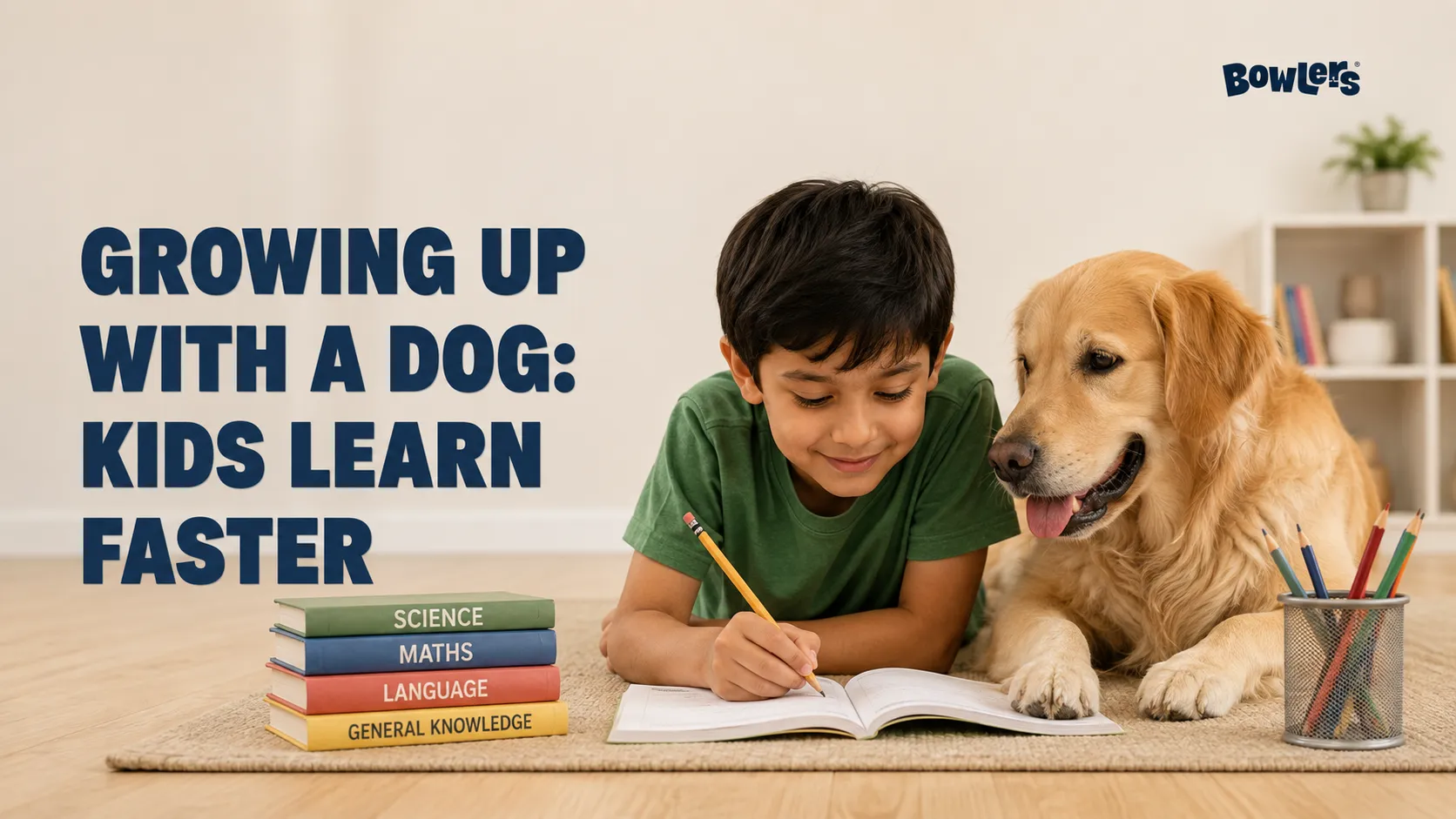
Table of contents
- The Empathy Classroom That Lives in Your Home
- Routine, Responsibility & the Surprising Link to Academic Performance
- Language, Storytelling & the Dog Audience
- Physical Activity & Screen Time: The Dog Effect
- Processing Grief & Impermanence: One of Life's Greatest Lessons
- A Healthy Dog Helps Children Thrive
- Final Thoughts
- FAQs
Ask anyone who grew up with a dog, and they’ll probably tell you the same thing: their dog wasn’t just a pet. It was their first best friend, their first lesson in kindness and often their first experience of unconditional love.
Across India, more families are welcoming dogs into their homes than ever before. What was once considered a guard animal has become a true family member, especially in urban households and nuclear families. As parents look for ways to raise emotionally resilient and well-rounded children, many are discovering that dogs play a much bigger role than simply offering companionship.
The benefits of growing up with a dog extend far beyond happy memories for children in India. Dogs help children become more empathetic, responsible, confident, and socially aware while encouraging healthier daily habits and stronger family connections.
In this blog, we’ll explore how dogs positively influence child development and why they may be one of the greatest teachers a child can have.
The Empathy Classroom That Lives in Your Home
Dogs communicate without words. Instead, they express themselves through body language, facial expressions, posture, and behaviour. Children naturally begin paying attention to these subtle cues, learning to recognise when their dog is excited, scared, hungry, tired, or simply wants some quiet time.
These small daily observations become valuable emotional lessons.
When children notice their dog isn’t eating well or seems unusually quiet, they begin to understand compassion and care. Celebrating a wagging tail after school or comforting a frightened dog during thunderstorms teaches emotional awareness in a way few experiences can.
Several studies have found that children growing up with pets often demonstrate higher levels of empathy and emotional intelligence compared to those without pets. This emotional sensitivity doesn’t stay limited to animals it carries into friendships, classrooms, and family relationships.
For many urban Indian children growing up without siblings, a dog often becomes a trusted companion, helping them develop social and emotional skills through everyday interaction.
This is one of the biggest reasons parents are searching for how dogs help child development in India and becoming an increasingly discussed topic among parents and educators.
Routine, Responsibility & the Surprising Link to Academic Performance
Dogs thrive on routine, and children benefit from it too. Regular feeding, walks and care help build healthy habits and a sense of responsibility.
Simple tasks like filling a water bowl or feeding the family dog teach discipline, time management, and accountability. They also strengthen planning, focus, and organisational skills.
When children forget to care for their dog, they quickly learn that someone depends on them. This real-life responsibility encourages empathy and consistency.
Over time, these daily routines help children become more organised and self-disciplined, qualities that often support better academic performance.
Language, Storytelling & the Dog Audience
Many children naturally talk to their dogs. They share stories, ask questions, and sometimes even read aloud. While dogs don’t respond with words, they provide a patient, non-judgemental audience that helps children build confidence.
This safe, pressure-free environment helps children build confidence in speaking, reading, and storytelling. Programmes like “Read to a Dog” have shown that practising with dogs can reduce reading anxiety and improve fluency.
For shy children, a dog often becomes the perfect audience, encouraging communication without fear of judgement.
These simple conversations contribute significantly to dog benefits for child brain development and overall communication skills.
Physical Activity & Screen Time: The Dog Effect
Children don’t usually need convincing to play with a dog. Whether it’s a game of fetch, a walk around the neighbourhood, or simply running through the park together, dogs naturally encourage movement.
Unlike organised exercise, playing with a dog feels fun rather than mandatory. Daily walks become family habits instead of fitness goals.
Research consistently shows that children living with dogs spend more time outdoors and are generally less sedentary than their peers.
Another major benefit?
Dogs compete very successfully against screens.
A dog waiting by the door with a wagging tail is often much more exciting than another hour spent watching videos or playing games on a tablet.
Regular outdoor activity also supports:
- Better physical fitness
- Healthy weight management
- Vitamin D exposure
- Improved sleep quality
- Greater social interaction with neighbours and other pet parents
These are important dogs and kids learning India experiences that contribute to both physical and emotional well-being.
Processing Grief & Impermanence: One of Life’s Greatest Lessons
This may be one of the hardest but most valuable lessons dogs teach.
Dogs have shorter lifespans than humans, which means many children experience the loss of a beloved pet during childhood.
While painful, this moment also provides parents with an opportunity to teach resilience, gratitude, and healthy ways of coping with loss.
Children learn that loving deeply also means accepting that goodbyes are part of life.
With honest conversations, emotional support, and age-appropriate guidance, parents can help children process grief in healthy ways rather than avoiding difficult emotions altogether.
Many psychologists believe that children who experience pet loss with family support often develop stronger emotional coping skills for future life challenges.
In many ways, a dog becomes a child’s first teacher not only about friendship but also about compassion, gratitude, and resilience.
A Healthy Dog Helps Children Thrive
Every lesson your child learns from a dog depends on one important factor, the dog’s health and happiness.
An energetic, well-fed dog is naturally more playful, patient, and eager to engage with children.
That’s why nutrition plays such an important role.
Bowlers Dog Food Family India offers complete and balanced nutrition designed to support your dog’s overall health, immunity, digestion, and energy.
For growing puppies, Bowlers Nutrimax Puppy Food provides quality protein, essential vitamins, minerals, DHA, and balanced nutrition to support healthy growth during their early years.
For adult family dogs, Bowlers Wet Food Adult helps maintain healthy digestion, strong muscles, sustained energy, and overall wellness so they can continue being the loving companions your children grow up with.
Final Thoughts
The benefits of growing up with a dog for children in India include stronger emotional development, greater responsibility, and improved confidence.
To give your child the best companion possible, ensure your dog receives the love, care, exercise, and balanced nutrition they deserve. With Bowlers Dog Food India, you’re not just feeding your dog, you’re supporting a healthier, happier family member who will continue teaching valuable life lessons every single day.
FAQs
1. How does growing up with a dog benefit children?
Growing up with a dog helps children develop empathy, responsibility, communication skills, confidence, and healthier daily routines.
2. Can dogs improve a child’s learning and academic performance?
Yes. Caring for a dog encourages discipline, time management, focus, and routine, all of which support learning and academic success.
3. Do dogs help children become more confident?
Absolutely. Dogs provide unconditional companionship, allowing children to express themselves freely and build emotional confidence.
4. Are dogs good for children living in nuclear families?
Yes. Dogs often become trusted companions for only children, helping reduce loneliness while encouraging emotional and social development.
5. What is the best dog food for growing family dogs?
A complete and balanced diet, such as Bowlers Nutrimax Puppy Food for puppies and Bowlers Nutrimax Adult for adult dogs, helps support healthy growth, digestion, immunity, and overall well-being.
6. Why should every child grow up with a dog?
Beyond companionship, dogs teach empathy, responsibility, resilience, communication, and kindness valuable life skills that stay with children well into adulthood.