How to Introduce Your Pet Dog to Local Community Dogs: A Safe, Stress-Free Guide
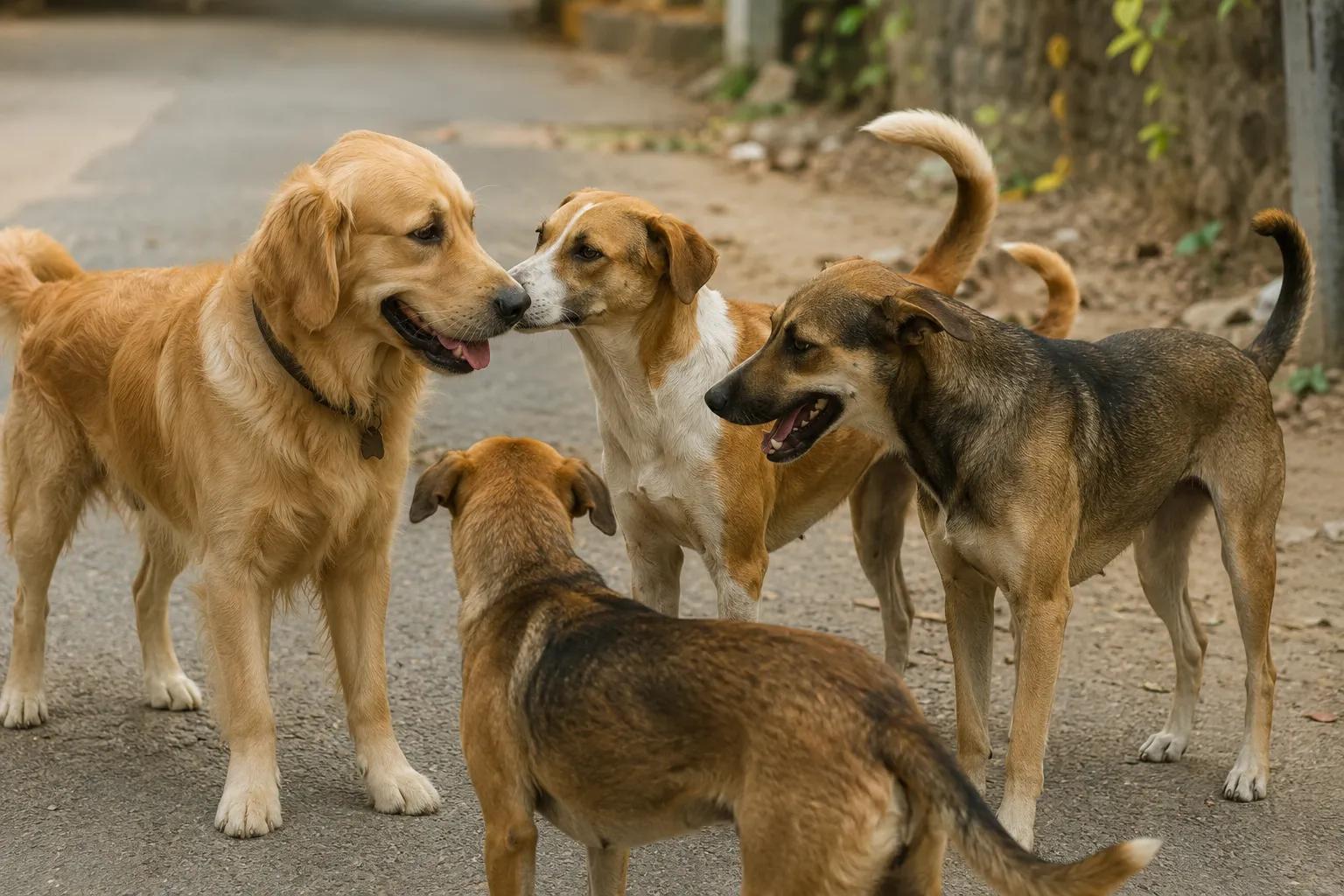
Table of contents
- Why Introducing Dogs Carefully Matters
- Before Introducing Your Dog to a Community Dog
- How to Introduce Your Pet Dog to Local Community Dogs
- What If the Community Dog Approaches Your Dog First?
- Should You Let Your Dog Play With Community Dogs?
- What to Do If Your Dog is Nervous Around Community Dogs
- What If Your Dog is Too Excited?
- Don't Forget Your Dog's Overall Well-Being
- How to Make Dog Walks More Comfortable in Indian Neighbourhoods
- Final Takeaway
Meeting other dogs can be a great part of your pet dog’s social life. But introducing a pet dog to local community dogs is not something you should leave entirely to chance.
Community dogs may be unfamiliar with your pet, protective of their territory, cautious around people, or simply unsure about a new dog entering their space. Your pet may also react differently when meeting dogs outdoors than they do with familiar dogs at home.
The good news is that you can make these encounters safer and calmer by understanding dog body language, choosing the right setting, and allowing the dogs to interact at their own pace.
This guide explains how to introduce your pet dog to local community dogs in a practical, responsible way.
Why Introducing Dogs Carefully Matters
Dogs communicate largely through body language, scent, movement, and vocalisation. A quick approach that looks friendly to one dog can feel threatening to another.
This is particularly important when your pet meets a community dog you don’t know.
A careful introduction can help you:
- Reduce unnecessary fear and excitement
- Avoid forcing an uncomfortable interaction
- Give both dogs enough space to assess each other
- Recognise warning signs before a situation escalates
- Build more positive experiences around other dogs
Remember: socialisation does not mean your dog has to greet every dog they see. A well-socialised dog can also calmly walk past another dog without interacting.
Before Introducing Your Dog to a Community Dog
Preparation starts before the dogs meet.
1. Make Sure Your Dog is Comfortable on a Leash
Your dog should be reasonably comfortable walking on a leash and responding to simple cues such as:
- Come
- Stay
- Leave it
- Look at me
- Let’s go
These cues can help you redirect your dog if the other dog becomes uncomfortable or the situation changes.
Avoid using a leash to drag your dog toward another dog. The goal is to give your dog guidance, not to force an interaction.
2. Keep Vaccinations and Preventive Care Up to Date
Before allowing your dog to interact closely with unfamiliar dogs, speak with your veterinarian about appropriate vaccinations and parasite-prevention measures for your area.
This is especially relevant when your dog regularly spends time outdoors.
Do not allow interaction with a dog that appears seriously ill, injured, unusually lethargic, or otherwise unwell.
3. Choose the Right Time and Place
Avoid introducing dogs in a narrow lane, crowded area, doorway, or other location where either dog can easily feel trapped.
A more open area with enough room to move away can make the encounter less intense.
Also consider the local dog’s behaviour and territory. A dog that is relaxed while resting at a distance may react very differently if another dog suddenly enters the space it considers its own.
How to Introduce Your Pet Dog to Local Community Dogs
Step 1: Start at a Distance
Don’t begin by walking your dog directly toward the community dog.
Instead, stay far enough away that both dogs can notice each other without becoming highly excited, frightened, or aggressive.
Watch your own dog’s reaction.
If your dog is staring intensely, pulling hard, barking repeatedly, lunging, or becoming difficult to redirect, you’re probably too close.
Increase the distance and give your dog time to settle.
Step 2: Look at Both Dogs’ Body Language
Body language tells you much more than a wagging tail alone.
Signs that a dog may be comfortable
Depending on the individual dog, relaxed behaviour can include:
- A loose body
- Natural movement
- Soft facial expression
- Normal sniffing
- Ability to look away
- Willingness to move normally rather than freeze or charge
Signs that you should create more distance
Take the situation seriously if you notice:
- Stiff posture
- Fixed staring
- Raised hackles combined with tension
- Growling
- Snarling
- Repeated barking
- Lunging
- Freezing
- Attempting to escape
- Tail position and movement that appear tense rather than relaxed
Never assume that a dog is friendly simply because its tail is wagging.
If either dog looks uncomfortable, calmly increase the distance.
Step 3: Let Them Approach Gradually
If both dogs remain relaxed, you can gradually reduce the distance.
A useful approach is to walk in the same general direction rather than forcing a face-to-face greeting.
Parallel walking gives dogs an opportunity to become aware of each other without the pressure of an immediate nose-to-nose encounter.
Keep the leash reasonably loose where it is safe to do so. A constantly tight leash can add tension to an already uncertain situation.
Step 4: Allow a Brief Sniff
Dogs rely heavily on scent when gathering information about another dog. If both dogs appear comfortable, allow a short, supervised sniff. You don’t need to make the first interaction long.
A few seconds of calm investigation followed by moving away can be a perfectly good first meeting.
In fact, ending the interaction while both dogs are still comfortable is often better than waiting until one becomes overwhelmed.
Step 5: Give the Dogs an Easy Exit
Never corner dogs during an introduction. Both dogs should have the opportunity to move away.
If your dog wants to retreat, don’t force them to continue. Likewise, don’t allow your dog to chase a community dog that is trying to create distance.
Respecting boundaries is an important part of healthy dog socialisation.
What If the Community Dog Approaches Your Dog First?
This is common during neighbourhood walks. If a community dog approaches, don’t immediately pull your dog toward or away from it unless necessary.
First, assess the situation.
Ask yourself:
- Does the approaching dog look relaxed?
- Is my dog relaxed?
- Do I have enough space to move away?
- Is either dog showing signs of fear, guarding, or aggression?
If the interaction doesn’t look safe, calmly create distance. You don’t need to prove that your dog can handle every encounter.
A simple “let’s go” cue and a change of direction can be much safer than allowing an uncertain interaction to continue.
Should You Let Your Dog Play With Community Dogs?
Not necessarily. Play should only happen when both dogs appear comfortable and the circumstances are appropriate.
Healthy play usually involves back-and-forth interaction rather than one dog constantly chasing, pinning, cornering, or overwhelming the other.
Dogs may also have very different play styles. A young, energetic pet may annoy an older or cautious dog without meaning to.
If play becomes too intense, calmly separate the dogs and allow them to settle.
And because you may not know the health history or temperament of a local community dog, casual contact should always be considered carefully.
What to Do If Your Dog is Nervous Around Community Dogs
Don’t force your dog to “get used to it” by repeatedly putting them close to unfamiliar dogs.
Instead, work below your dog’s stress threshold.
For example:
- Find a distance at which your dog can notice another dog without panicking.
- Reward calm behaviour if your dog is comfortable taking food.
- Move away before your dog becomes overwhelmed.
- Repeat these controlled exposures over time.
- Gradually reduce the distance only when your dog remains comfortable.
Progress can be slow, and that’s okay.
The goal isn’t to make your dog greet every community dog. The goal is to help your dog feel safe and behave calmly around other dogs.
If your dog consistently barks, lunges, snaps, or becomes extremely fearful around dogs, consider getting help from a qualified force-free trainer or veterinary behaviour professional.
What If Your Dog is Too Excited?
Excitement can be just as difficult to manage as fear.
A dog that pulls, jumps, whines, barks, or charges toward another dog may simply want to interact, but that behaviour can make the other dog uncomfortable.
Create more distance and reward your dog for looking at the other dog calmly before returning their attention to you.
Over time, your dog can learn that seeing another dog doesn’t automatically mean they get to rush over and say hello.
Don’t Forget Your Dog’s Overall Well-Being
Good social experiences are only one part of caring for a dog.
Regular exercise, mental stimulation, veterinary care, grooming, rest, clean drinking water, and appropriate nutrition all contribute to your pet’s overall well-being.
High-value treats and chews become especially useful during training once your dog is comfortable eating around distractions. Using high-reward options like Bowlers Jerky helps keep their attention focused on you rather than the surrounding environment.
When using food during socialisation or training, keep portions appropriate for your dog’s overall daily diet rather than adding unlimited treats on top of meals.
Common Mistakes to Avoid
Forcing a Face-to-Face Greeting
Walking two unfamiliar dogs directly toward each other and expecting an instant friendship can create unnecessary pressure.
Give them time and space
Tightening the Leash Suddenly
A sudden leash correction can increase tension during an already uncertain encounter.
Use calm handling and create distance when needed.
Ignoring Warning Signals
Growling, freezing, stiffening, or attempting to escape should not be dismissed as a dog simply “being difficult.”
These signals can tell you that the dog needs more space.
Letting Dogs Chase Each Other
Chasing can quickly turn from playful to stressful, particularly when one dog doesn’t want to participate.
Stop the interaction if one dog repeatedly tries to escape.
Assuming Every Dog Wants to Socialise
Some dogs prefer to keep their distance.
That’s perfectly normal.
A successful encounter can simply mean two dogs notice each other and continue walking calmly.
What to Do If Dogs Start Fighting
If a serious fight begins, your priority is safety.
Do not put your hands between fighting dogs or grab their collars with your bare hands. People can be badly bitten accidentally during attempts to separate dogs.
If possible, create separation using a safe barrier or another method that does not put your hands near the dogs’ mouths, and get professional or veterinary help if anyone is injured.
After a bite or suspected exposure to a potentially infectious animal, contact your veterinarian promptly and follow local medical or animal-health guidance.
How to Make Dog Walks More Comfortable in Indian Neighbourhoods
For many Indian pet parents, encountering free-roaming or community dogs is simply part of everyday life.
That makes practical management especially important.
Try to:
- Carry a leash that gives you reliable control.
- Avoid allowing your dog to approach dogs that are eating or guarding something.
- Give dogs space around puppies.
- Be particularly careful around injured or frightened dogs.
- Avoid crowded areas when your dog is still learning calm behaviour.
- Learn your neighbourhood’s common dog routes and territories.
- Keep your dog focused on you when passing dogs at close range.
- Carry essentials for your dog’s walk, including water where appropriate.
Most importantly, don’t treat every community-dog encounter as a socialisation opportunity.
Sometimes the best choice is simply to walk past.
Final Takeaway
Introducing your pet dog to local community dogs should be about calm observation, gradual interaction, and respect for boundaries.
You don’t need to make every dog encounter into a friendship. A successful walk may simply mean your dog sees another dog, stays relaxed, and continues walking.
Start from a comfortable distance. Watch body language. Avoid forcing contact. Allow dogs to move away. And when you’re unsure about a particular interaction, choosing distance is always a valid choice.
Alongside safe socialisation, remember the basics of responsible pet care: regular veterinary attention, exercise, enrichment, rest, hydration and appropriate nutrition. If you’re looking for dog food options, visit Bowlers’ Dog Food to explore the range directly.
Your dog’s confidence grows through safe experiences, not forced ones.
FAQs
Can your pet dog become friends with a community dog?
Yes, some dogs can develop comfortable relationships, but there is no guarantee that two unfamiliar dogs will become friends. Let their behaviour guide you rather than expecting a particular outcome.
Is it safe for a vaccinated pet dog to meet community dogs?
Vaccination reduces the risk of several preventable diseases, but it doesn’t make every outdoor interaction risk-free. Your dog can still encounter parasites, injuries, infections, or unsafe behaviour. Discuss your dog’s individual risks and preventive-care needs with your veterinarian.
Should you let your dog sniff every community dog?
No. Your dog doesn’t need to greet every dog they encounter. If either dog appears uncomfortable, keep your distance.
Why does your friendly dog bark at community dogs?
Barking can have many causes, including excitement, fear, frustration, territorial behaviour, or uncertainty. Look at the rest of your dog’s body language and the context rather than interpreting barking on its own.
What should you do if a community dog follows you?
Stay calm and avoid running. Create distance if possible, use your dog’s familiar cues, and move toward a safer area. If the dog appears aggressive or you feel unsafe, prioritise getting yourself and your dog away rather than attempting an introduction.
How long should the first meeting last?
There is no universal ideal duration. A short, calm interaction is generally preferable to a prolonged encounter in which one or both dogs become stressed.