Aggressive vs Playful Behavior in Dogs: Spotting the Difference
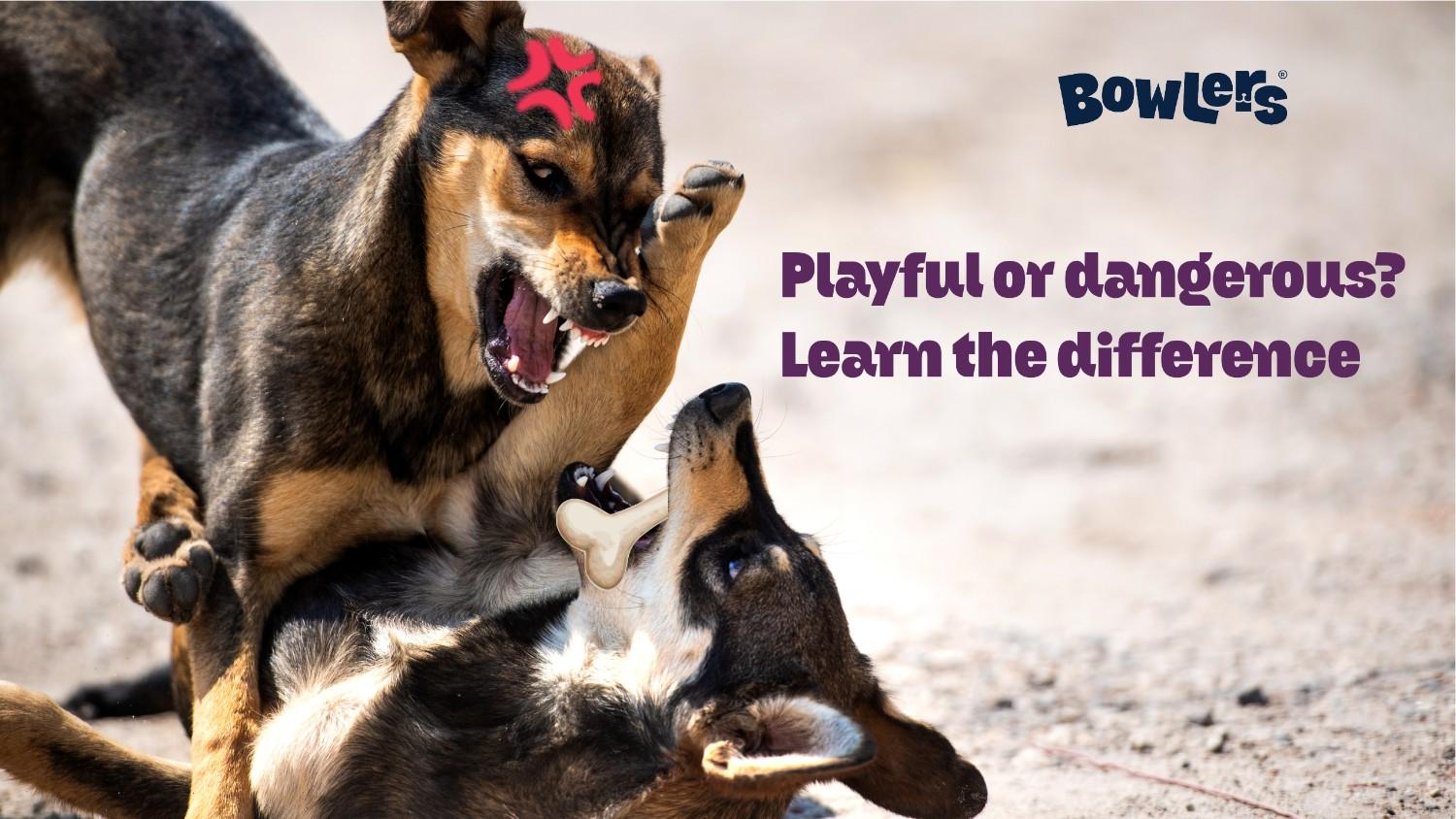
Table of contents
- Playful vs Aggressive – Why It Gets Confusing
- Playful Dog Behavior: What It Looks Like
- Aggressive or Warning Behavior: Subtle but Serious
- Quick Comparison Chart
- Why Dogs Switch from Play to Aggression
- How You Should Respond
- Where Bowlers Fits In: Calm Energy Starts with Nutrition
- FAQs: For Quick Understanding
- 1. How do I know if a growl is playful or aggressive?
- 2. Why does my dog snap during play?
- 3. Can a dog suddenly turn aggressive without signs?
- 4. Is rough play between dogs okay?
- 5. Does food help aggressive behavior?
Dogs don’t use words: they use posture, sound, tail movement, and eye signals to communicate.
Sometimes excitement looks like aggression… and sometimes subtle warnings go unnoticed until a problem occurs.
As discussed in our main article: Understanding Dog Body Language and Communication, recognising emotional cues early is the foundation of stress-free companionship.
In this section, we go one level deeper: how to tell when your dog is playing, and when they are warning.
Playful vs Aggressive – Why It Gets Confusing
A playful jump, a growly sound during rough play, playful nipping: all of these can look aggressive to new pet parents.
On the other hand, stiff posture, deep stare, or slow tail wags may appear harmless but actually signal discomfort.
Knowing the difference keeps your dog (and others) safe.
Playful Dog Behavior: What It Looks Like
Play behavior is loose, relaxed, and bouncy: full of invitation and joy.
Dogs often display:
✔ Loose Wagging Tail
Wag is wide, flowing, not stiff
This means excitement or positive social interest.
✔ Play Bow
Front legs lowered, rear up, tail moving: a universal “Let’s play!” gesture.
✔ Relaxed Mouth + Open Expression
Mouth open, tongue visible, eyes soft and blinking.
If you want to decode eye signals better, see Section 2 – Dog Eye Contact Explained.
✔ Bouncy Movements
Quick steps forward-backward, often with silly enthusiasm.
✔ Brief Growls During Fun
Play growls sound lighter, more rhythmic, not deep or tense.
In playful mode, the body is soft, flowing, and inviting.
Aggressive or Warning Behavior: Subtle but Serious
Aggression isn’t always loud: many warnings are silent.
Key signs include:
✔ Stiff, Frozen Body
No bounce, no flow: the body becomes hard like a board.
✔ Direct Intense Stare
Hard focus without soft blinking
✔ Slow, High Tail Wags
Opposite of happy wag: this often means I’m assessing or uncomfortable.
(Revisit Section 1 to compare wag speeds and tail height.)
✔ Raised Hackles
Hair stands along the spine: high arousal, either aggression or fear.
✔ Curling Lip / Snarl
Teeth showing = clear message: Give space.
Aggression is structured, controlled, and tense: not playful.
Quick Comparison Chart
| Behavior Type | Tail Movement | Eyes | Body | Sound |
|---|---|---|---|---|
| Playful | Loose, sweeping wag | Soft gaze, blinking | Bouncy, wiggly | Light growls, excited barks |
| Aggressive | High, stiff, slow wag | Hard stare, no blink | Muscle tension, frozen | Deep growl, warning bark |
Why Dogs Switch from Play to Aggression
Sometimes play escalates: high excitement can flip into conflict.
Play may turn tense if:
- Toys are guarded
- Space is restricted
- Another dog crosses comfort boundary
Human interaction becomes overwhelming
How You Should Respond
If Playful:
✔ join softly
✔ throw toy, engage, encourage movement
✔ use playful voice
✔ reward calm pauses
If Aggressive or Warning Behaviors Show:
- don’t punish growling: it’s a communication tool
- avoid sudden approach
- reduce pressure or trigger
- redirect attention calmly
Growling is not “bad.”
It’s a warning: a chance to prevent a bite.
Where Bowlers Fits In: Calm Energy Starts with Nutrition
A well-nourished dog is often calmer, more balanced, and emotionally settled.
If your dog shows high irritability or stress-triggered responses, diet can play a role too.
Balanced formulas like Bowlers Nutrimax Adult help support:
- Smooth Digestion
- Healthy Coat
- Stronger Immunity
- High Energy Levels
- Sharper Vision
A calm mind comes from a well-fed body. Because behavior is communication: and nutrition supports both body and brain.
FAQs: For Quick Understanding
1. How do I know if a growl is playful or aggressive?
Play growls occur with a wagging body and relaxed posture.
Aggressive growls pair with stiffness, stillness, or a hard stare.
2. Why does my dog snap during play?
Over-arousal, resource guarding, or your dog reached a limit. Pause play and let them cool down.
3. Can a dog suddenly turn aggressive without signs?
Rarely. Most dogs give multiple signals first: tail stiffening, whale eye, freezing. Learning body language prevents shocks.
4. Is rough play between dogs okay?
Yes, if both bodies remain loose, role-reversing, and happy. End it if tension increases.
5. Does food help aggressive behavior?
Not directly: but balanced nutrition food support higher energy levels, stronger immunity, and smoother digestion, helping your dog stay in high spirits, always.