Dog Eye Contact: What Your Pup is Trying to Tell You
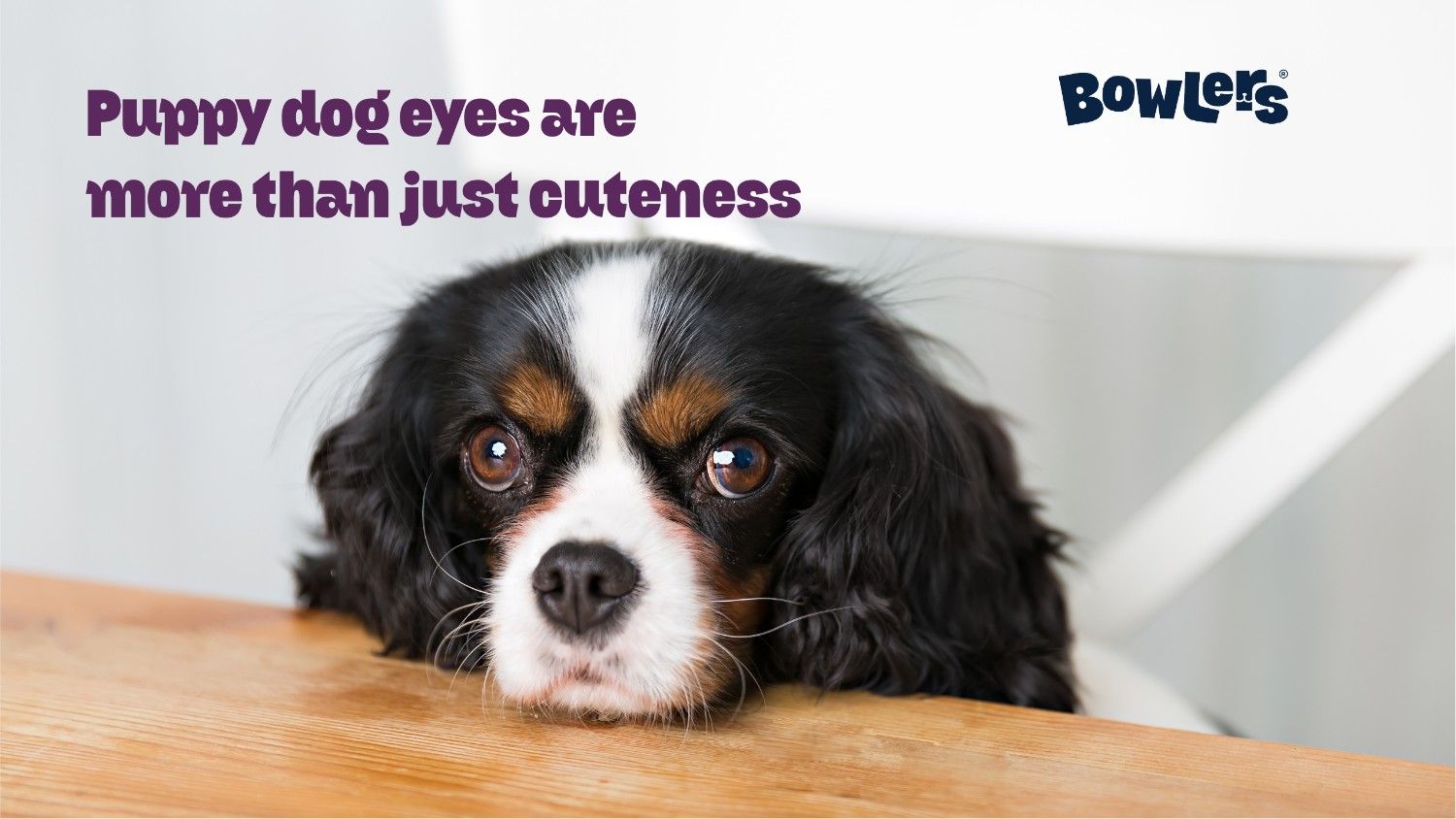
Dogs may not speak, but their eyes perform the conversation for them.
A soft blink, a long stare, a quick look away: these are not random actions. They are messages.
Understanding what eye contact means helps you read emotions, solve behavioural issues faster, and deepen your bond with your dog on a beautifully intuitive level. In the main article – Understanding Dog Body Language and Communication, we discussed how the entire body speaks.
In this article, we’re looking at one of the most powerful channels of expression: the eyes.
Why Eye Contact Matters in Dog Communication
Eye contact is a direct emotional line between a dog and a human. It can express:
- Trust
- Affection
- Curiosity
- Stress
- Challenge
- Request for attention
Humans talk through words. Dogs talk through gaze.
When you learn to read eyes correctly, you can respond with precision: reducing fear, correcting behaviour, or strengthening connection effortlessly.
Types of Eye Expressions and Their Meanings
1. Soft Eyes: Calm, Safe and Connected
Relaxed eyelids, slow blinking, gentle gaze.
This is a sign your dog feels secure, loved, and emotionally settled.
You’ll see this during cuddles, after playtime, or when they rest near you without tension.
2. Wide Eyes With Visible Whites (Whale Eye)
When a dog turns its head but keeps its eyes fixed, showing the white part, it often signals:
⚠ Stress
⚠ Discomfort
⚠ Anxiety
⚠ Warning to back away
This usually appears during resource guarding, nail trimming, rough play, or unfamiliar touch.
If this occurs frequently, refer to Section 5: Signs of Stress and Anxiety in Dogs.
3. Direct Focused Stare: Caution Needed
A firm locked gaze, especially with a stiff body, can mean:
- The dog is assessing a threat
- Feeling defensive or territorial
- Potential for aggression
Combine this with tail and posture cues.
(If the tail is stiff and raised, explore Section 4: Aggressive vs Playful Behavior for deeper understanding.)
4. Slow Blinking at You
Dog version of a smile.
A slow blink means:
- I trust you
- I feel safe near you
- You are “my person”
Reasons could be:
- Scolding
- Loud environments
- New people
- Uncertainty in social settings
If accompanied by tail tucking, see Section 1 – Tail Signals Breakdown.
5. Avoiding Eye Contact / Looking Away
When a dog breaks eye contact or turns its head away, it is often showing submission, respect, or trying to diffuse tension. It can also indicate uncertainty, anxiety, or feeling overwhelmed in social settings or during scolding.
6. Squinting or Half-Closed Eyes
Indicates contentment OR pain, depending on the context.
If relaxed:
– Dogs are happy, sleepy, and satisfied.
If tense, ears back, no playfulness:
– Pain or discomfort. A vet check may be needed.
Eye Contact + Tail + Posture = Full Meaning
Never decode eyes alone. Emotions become accurate only when signals combine.
| Eye Expression | Tail Signal | Body Language | Meaning |
|---|---|---|---|
| Soft blink | Relaxed tail | Loose posture | Calm, loving, bonded |
| Wide whale eye | Tail low | Leaning away | Fear, discomfort |
| Hard stare | Tail stiff, high | Rigid stance | Aggression or warning |
| Gentle gaze | Wagging low | Play bow | Friendly, playful |
How to Respond to Eye Signals Correctly
| What You See | How You Should React |
|---|---|
| Soft eyes | Reinforce trust and reward affection with their favourite Puppy treats from Bowlers! |
| Avoidance gaze | Reduce pressure, create a safe space |
| Wide eyes | Stop the activity causing stress immediately |
| Hard stare | Stay calm, do not force an approach, redirect attention |
| Curious gaze | Engage, train, and encourage communication |
A dog mirrors your emotional energy.
Your calm → their calm.
Your fear → their fear.
Training Tip: Build Bond Through Eye Contact
Try this simple bonding ritual:
The Gentle Gaze Exercise
- Sit calmly beside your dog
- Blink slowly and speak softly
- Treat or pet when they return your gaze naturally
Repeat this every day. It builds emotional trust and improves response to commands.
Recommended Next Step in Reading Dog Body Language
Continue the learning journey with the next behavioural mystery:
Section 3 – Why Dogs Tilt Their Heads: Cute Habit or Hidden Meaning?
Because sometimes that tilt + soft stare means, “I’m trying to understand you.”
FAQs
1. Why does your dog stare into your eyes?
To communicate, bond, seek reassurance, or read your emotions. It’s often love, unless the body is stiff or tense.
2. Is direct eye contact rude in dog language?
Between dogs, it can be a challenge. Between dog and human, it’s context-based. Calm gaze = bonding; hard stare = warning.
3. Your dog avoids looking at you. Should you worry?
Not always. It could be respect, anxiety, or confusion. Pair gaze with tail and body cues to decode accurately.
4. What does whale eye signal?
Stress or discomfort, it wants space. Stop what you’re doing and give comfort.
5. Can eye contact improve training?
Yes, strong eye engagement increases focus, bonding, and responsiveness to commands.
6. What does eye contact mean for dogs?
It depends heavily on context. It can be a sign of affection, a demand for attention, a challenge for dominance, or a threat depending on body language.
7. Do dogs blink their eyes?
Yes, dogs blink regularly to keep their eyes lubricated and protected, just like humans.
8. Do dogs understand eye contact?
Yes, dogs are exceptionally good at reading human gaze and using it to understand our intentions, read cues, and communicate.
9. Do dogs make eye contact with each other?
Rarely in a friendly way. In dog-to-dog communication, direct, prolonged eye contact is usually a challenge, threat, or sign of aggression.
10. Do dogs like eye contact with strangers?
No. Staring at an unfamiliar person is usually perceived as a threat or stressor; most strangers’ dogs will look away or try to avoid it.
11. Do dogs like eye contact with their owners?
Yes. With trusted owners, mutual eye contact triggers a release of oxytocin (the “love hormone”) in both humans and dogs, strengthening bonding.
12. Why do dogs squint their eyes when you talk to them?
It is a “calming signal” showing submission, relaxation, and appeasement; they are trying to look non-threatening and polite.
13. Why do dogs close their eyes when you talk to them?
It signifies trust, comfort, and vulnerability, showing they feel completely safe in your presence.
14. Why do dogs look away when you stare at them?
Turning the head or looking away is a classic appeasement gesture to de-escalate tension and show non-threat. (Note: This is distinct from “whale eye,” where the head turns away but the eyes stay locked on you in fear or vigilance.)
15. Why does your dog stare at you while lying down?
They are usually just keeping a watchful, affectionate eye on you, waiting for your next cue (like a walk or meal), or asking for attention.